
 Corporal John RICHARDSON

|
Regiment/Service:
|
Welch Regiment
|
|
Unit:
|
1st Battalion
|
|
Service Number:
|
14466099
|
|
Date of Death:
|
30th April 1952 – Killed in Action
|
|
Age:
|
25
|
|
Memorial:
|
|
|
Grave Reference:
|
22. 3. 1429.
|
Personal: John was born on Saturday, 11th December 1926 at Millom, Cumbria, the son of John and Nellie (née Dudley) Richardson, and his Service Records show that he was approximately 5’ 10” [1.78 m.] tall, weighed 12 st. 7 lbs [79.4 kgs.] and had black hair.
His recorded next of kin are his sister, Mrs M. Findlow, of Forest Avenue, Buxton, and his Step-mother, Mrs M. Richardson, of 4 Cavendish Chambers, The Quadrant, Buxton.
The 1939 Register shows John’s mother, Nellie, living at 4 Forest Avenue, Buxton, with his sister, Margaret (later Mrs. Findlow) and Edith Dudley, Nellie’s widowed mother. The redacted Register doesn’t show if John was living with them, but aged only 12 it is highly likely. The same source shows a Nina Bonsall, later Richardson, at 4 Marlow Street, Buxton (probably the stepmother named in John’s Service Records).

 John’s Grave and UN Military Cemetery, Busan, South Korea
Military Service: John served with the 1st Battalion, Welch Regiment. His age would suggest that he was a regular serving soldier, rather than a National Serviceman. [Under the National Service Act, introduced in 1947, healthy males aged 18 or over were obliged to serve in the armed forces for 18 months. After the outbreak of the Korean war in 1950, the length of service was raised to two years.]
On the 14th June 1951, Lieutenant Colonel H.H. Deane, Officer Commanding the 1st Battalion, announced that they would be proceeding to Korea in the Autumn to relieve the Gloucestershire Regiment on arrival. The Battalion was at that time stationed at Sobraon Barracks, Colchester, where it formed part of the 19th Infantry Brigade, 3rd Infantry Division. Subsequently, the Advance Party sailed for Korea on the 19th September.
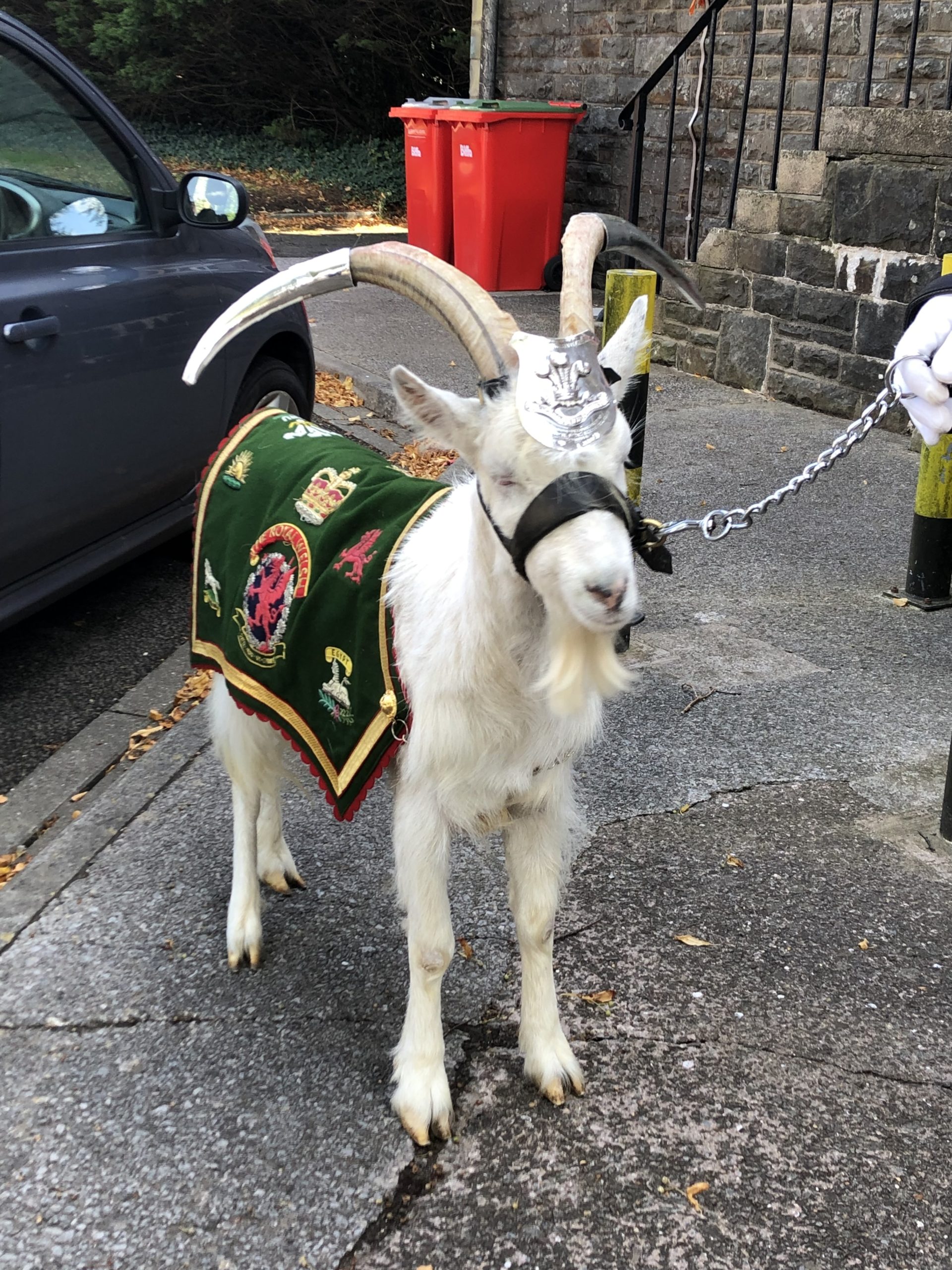 On 9th October 1951 the Battalion left Colchester by rail to Southampton and embarked for Korea on H.M.T. Empire Fowey. This, the main body, consisted of 28 Officers, 506 Other Ranks and the Regimental Goat!
The voyage ended at Pusan on 10th November 1951, where, once disembarked, they entrained and travelled north to Uijongbu.
On arrival the following morning they moved by road to Britannia Camp in the Commonwealth Division area and in heavy rain on the 12th and 13th November, the Battalion moved up to Chongdong-Ni and relieved the Gloucesters.
After several sorties in and out of the line in the following months, John’s 1st Battalion moved back into the Line on 18th April 1952 and took over Hill 355 from troops of the 2/15th United States Regiment which gave the Battalion an opportunity to show the Chinese a Welsh Dragon, namely that displayed prominently in red on the Battalion Battle Flag.
 John was Killed in Action on Wednesday, 30th April 1952, as a result of shrapnel wounds to his head and body caused by a: “Mortar Bomb lower slopes of Hill 355“.
He was buried at UN Military Cemetery Busan, South Korea, on Tuesday, 6th May 1952 at 2.00 p.m. The 1st Battalion, Welch Regiment, lost a total of 33 Officers and men in the Korean War.
The Cemetery at Busan is not a CWGC site, but after the end of the War the Korean government offered the land for permanent use by UN as a cemetery, and declared the grounds of the cemetery as inviolable.
The grassy area of the Cemetery occupies 144,182m² and originally held about 11,000 fallen UN soldiers. Since then, however, many countries have repatriated their war dead.
Currently 2,300 graves remain. In addition to the 885 Britons, the Cemetery includes 281 Australians, 378 Canadians, 44 French, 117 Dutch, 34 New Zealanders, 1 Norwegian, 36 Koreans, 11 South Africans, 642 Turks, 36 Americans, 4 unknown persons and 11 non-combatants. In 1978, the Korean government constructed the 12 m. high UN forces Monument.
John’s name is a fairly recent addition to the Buxton, The Slopes, Memorial, being added on a small separate plaque in February 2015. Details can be found on ‘The Slopes’ page of this site. (see below)

 After The Korean War the Welch Regiment was deployed to fight in Cyprus (1957-58), before serving in Libya (1958-60) and West Berlin (1961-63).
The Regiment’s final posting as an independent unit came in 1965, to Hong Kong, before amalgamating with The South Wales Borderers in 1969 to form The Royal Regiment of Wales (24th/41st Foot).
 Sources: On 28th February 2018 the Author was privileged to visit the UN Military Cemetery at Busan, and so pay his respects at the Grave of Cpl. John Richardson. [Photos above]
|
||
|
Commemorated on:
The Slopes Memorial – Plaque added and dedicated 26th February 2015
Welch Regiment Memorial Plaque, Llandaff Cathedral, Cardiff, Wales
|
